

Projects and tickets
Find your projects, switch between the five ways to view a project's tickets, and filter down to what you need.
This is the heart of orboto: where work lives. A project is a container for related work. Inside it, each unit of work is a ticket. This page covers finding your projects, the five ways to view a project's tickets, filtering, and a project's settings. For creating and working a single ticket, see Working with tickets.
Working with projects
Finding your projects
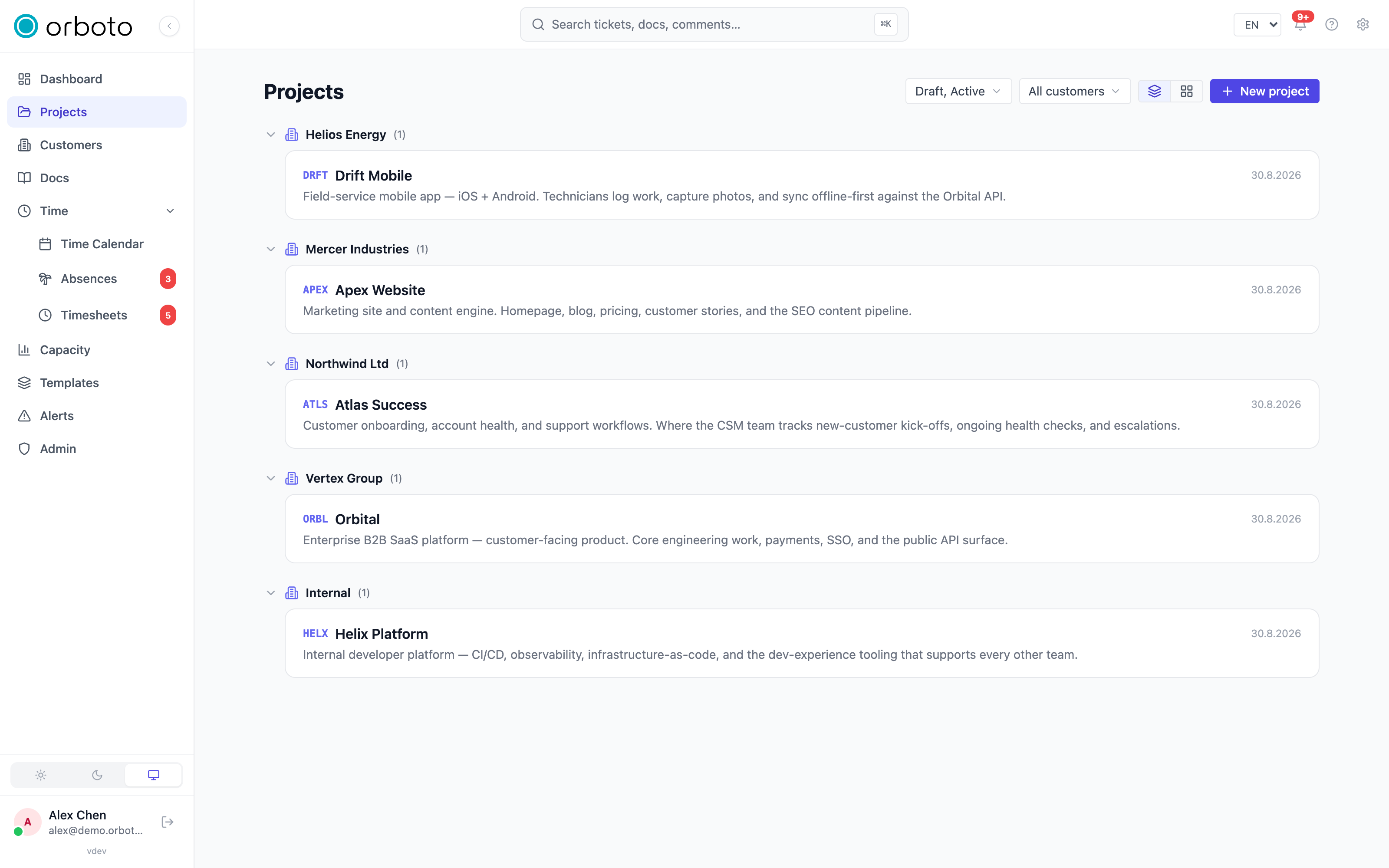
Select Projects in the sidebar to see every project you are a member of. Each project has a short key (for example ACME) that prefixes its tickets, so ticket ACME-42 belongs to the project with key ACME.
Pinning a project
If you spend most of your time in one project, you can pin it. Once pinned, selecting Projects in the sidebar takes you straight to that project instead of the list. Use the pin / unpin control on the project page to change this.
Creating a project
If you have permission to create projects:
- On the Projects screen, select New project.
- Give it a name and a key. The key is what prefixes every ticket in this project - pick something short and stable, since renaming it later changes how every existing ticket reference reads.
- Save. You can refine its settings afterwards (see Project settings) or start it from a template instead of blank.
Viewing a project's tickets
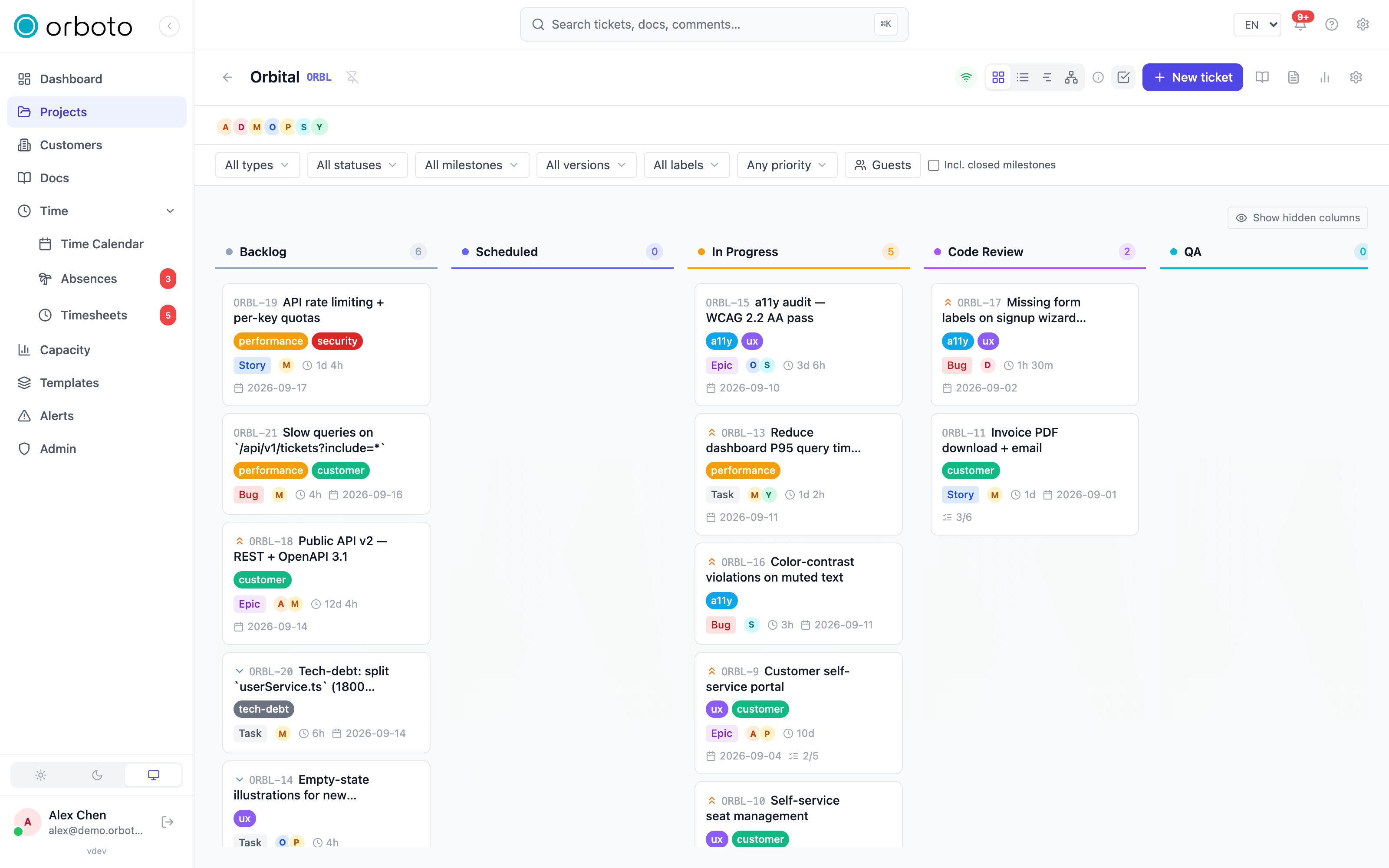
Open a project and you get five ways to look at the same tickets. Switch between them with the view buttons at the top of the project.

Kanban board
The Kanban board shows tickets as cards in columns, one column per status (for example To Do, In Progress, Done). Drag a card from one column to the next to move the work forward.
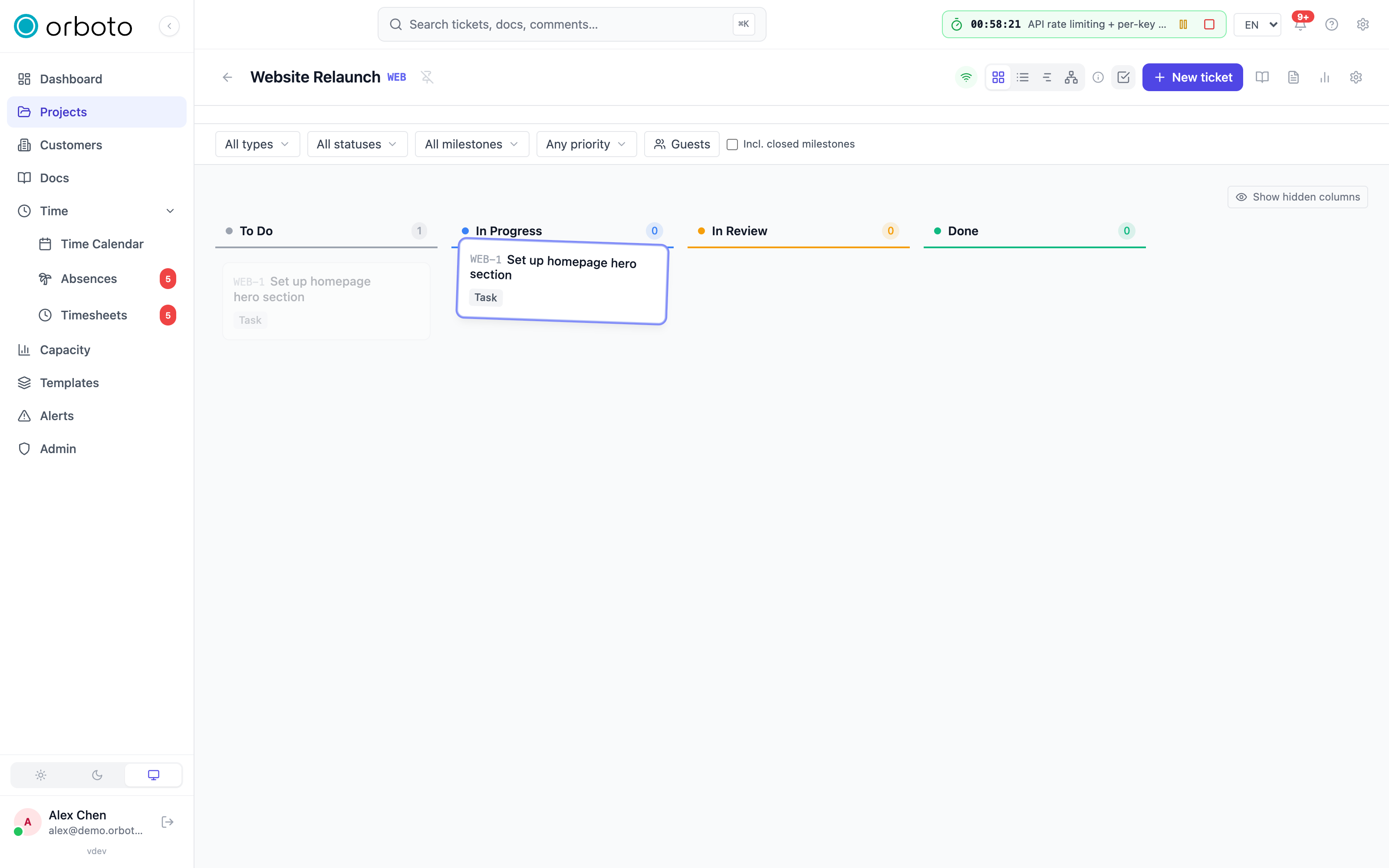
Showing hidden columns. Your administrator can mark some statuses as "hidden on the board by default" to keep the board tidy. When a project has such statuses, a Show hidden columns toggle appears above the board (it shows how many tickets are tucked away). Turn it on to reveal those columns, and Hide hidden columns to tidy up again. Your choice is remembered on this device.
List
The List view is a compact table. Use it when you want to scan many tickets, sort them, or group them:
- Group by - cluster rows by milestone, status, assignee, and so on.
- Sort by - order rows by the field you care about.
For quick capture, the List view also offers an inline quick-add row - type a title and press Enter to create a ticket without opening the full form.
Keep your place while sorting Added in v0.176.0 - by default the list re-sorts live, so a ticket you just saved can jump to the top while you are still working through the rows. If you prefer the list to hold still, switch List behavior after saving a ticket to Stay in place in your profile settings: saved tickets then keep their position, and when the underlying order has drifted a small Order changed button appears next to the sort control - click it whenever you are ready to re-sort.
Gantt
The Gantt view is a timeline. Each ticket is a bar placed by its start and due dates, so you can see what runs when and where things overlap. Dependencies between tickets are drawn as links between the bars. See Milestones and alerts for scheduling with milestones, and Versions and releases for release planning.
Network
The Network view draws tickets as a diagram of their dependencies - which ticket blocks which. It is the quickest way to spot a chain of blockers or the critical path through the work.
RACI
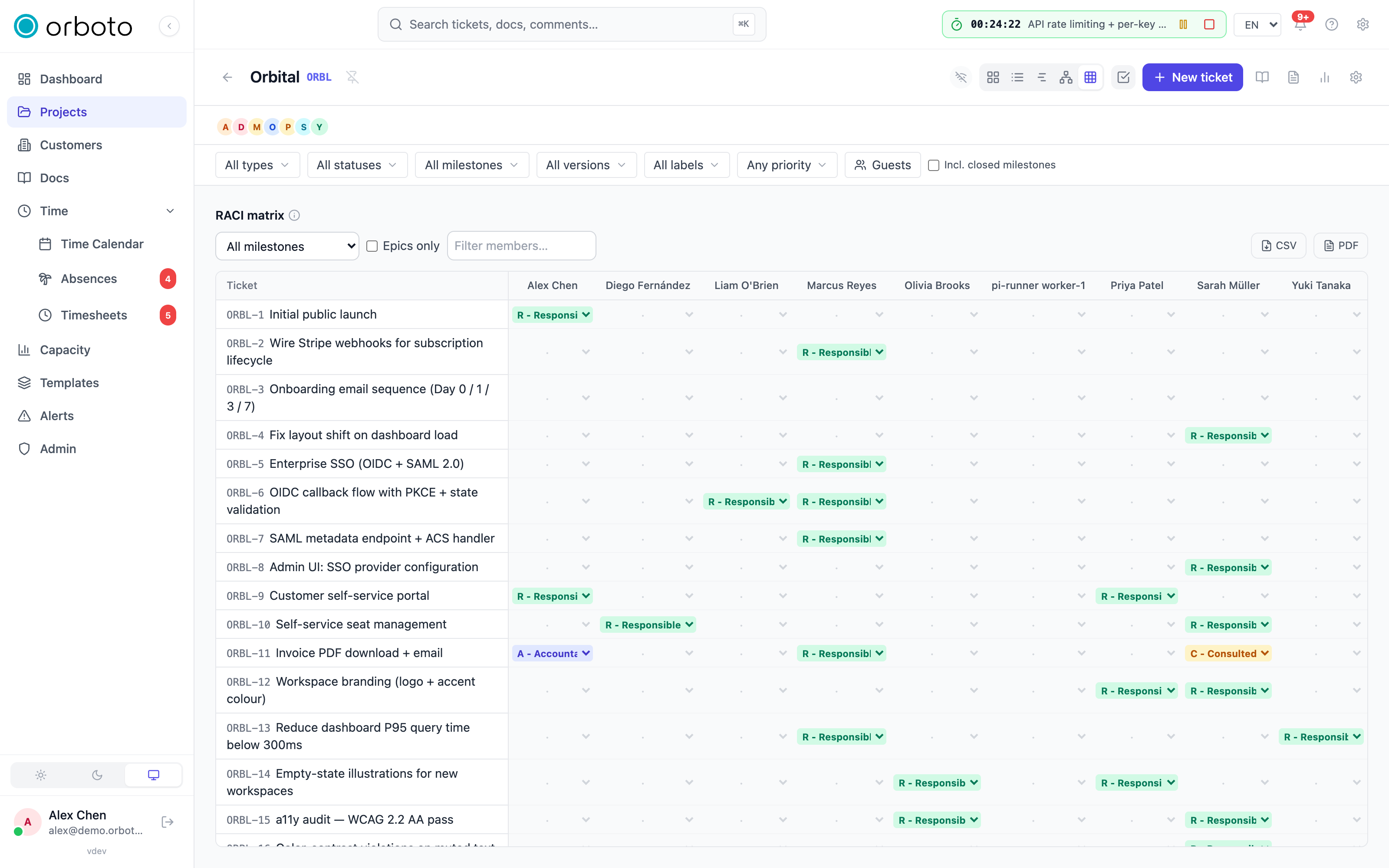
The RACI view is a responsibility matrix. RACI stands for Responsible (does the work), Accountable (owns the outcome), Consulted (gives input), and Informed (kept in the loop). This view shows, per ticket, who holds each of those roles, so accountability is never ambiguous.
Filtering and finding tickets in a project
Above the board is an avatar row for filtering by assignee - select one or more team members to see only their tickets - plus the filter bar:
- Filter by type (task, bug, story, epic), priority, milestone, version, or label.
- Choose No milestone to find unscheduled work, or Show closed milestones to include finished ones.
- Clear resets every filter at once.

If you manage guest access, a guest view toggle lets you preview the project exactly as an external user would see it.
Project settings: a quick tour
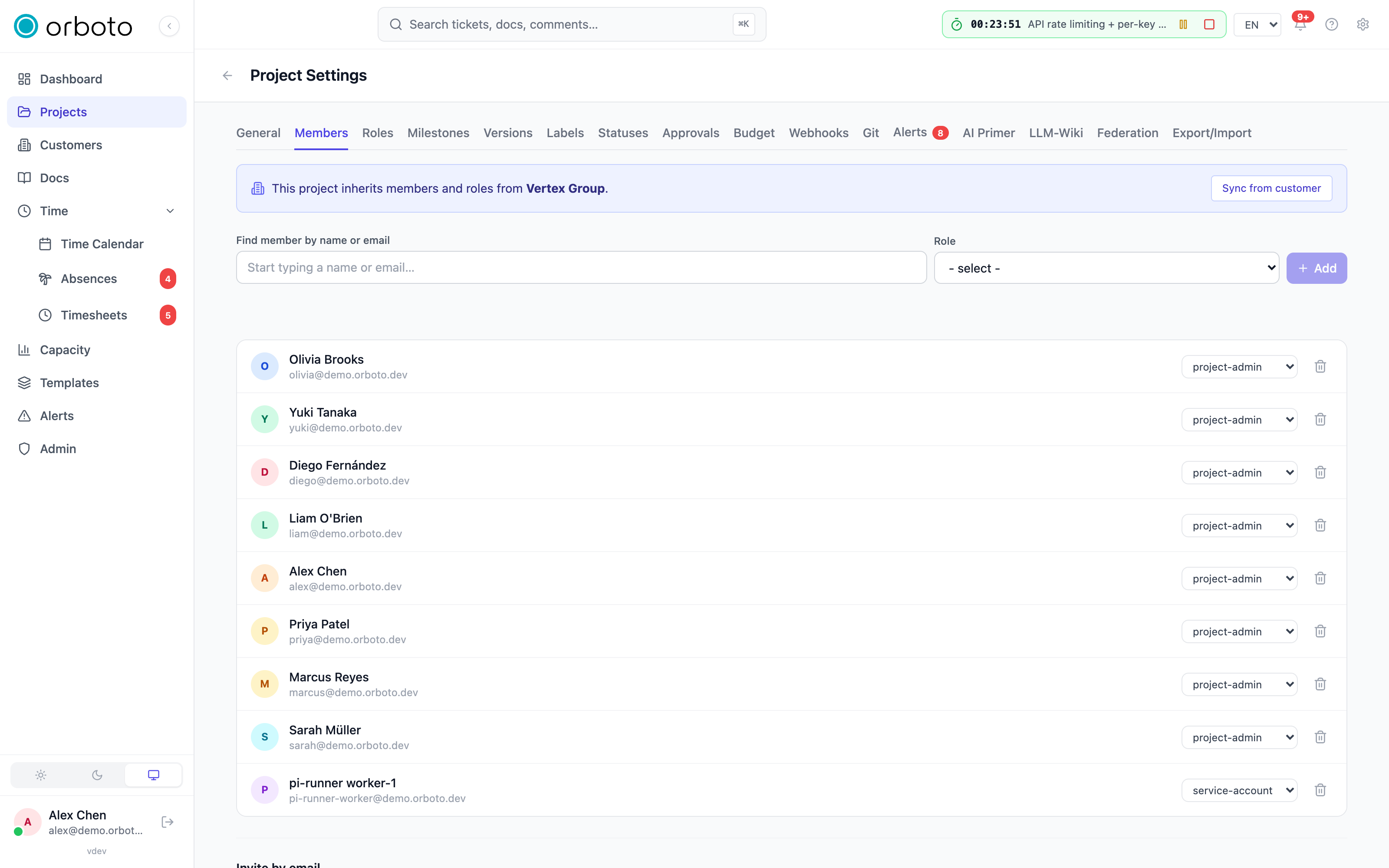
If you have permission to manage a project, the Settings button opens its configuration:
- Members - who is in the project and their role. You can also invite new members.
- Statuses / workflow - the columns on the Kanban board, including which are hidden by default.
- Labels - colored tags you attach to tickets.
- Milestones and versions - see Milestones and alerts and Versions and releases.
- Budgets - a money and/or hours budget for the project and its milestones (see Analytics).
- Alerts - project-scoped alert rules (see Milestones and alerts).
- Guest access - whether external users can see the project, and which milestones are open to them (see Customers and guests).
Troubleshooting
A ticket I expect to see is missing from the board. Check the filter bar and the assignee avatar row first - an active filter is the most common cause. If the ticket belongs to a closed milestone, turn on Show closed milestones; if it has no milestone at all, clear the milestone filter or select No milestone.
I can't find New project. Creating projects needs a permission an administrator grants - ask them, or ask to be added as a member of an existing project instead.
The Kanban board looks emptier than the List view for the same project. A status your administrator hid by default is likely holding tickets - toggle Show hidden columns above the board.